


Copyright © 2026 Chengdu Xinshijia Specialty Glass Technology Development Co., Ltd.

 Language
 More Language
Language 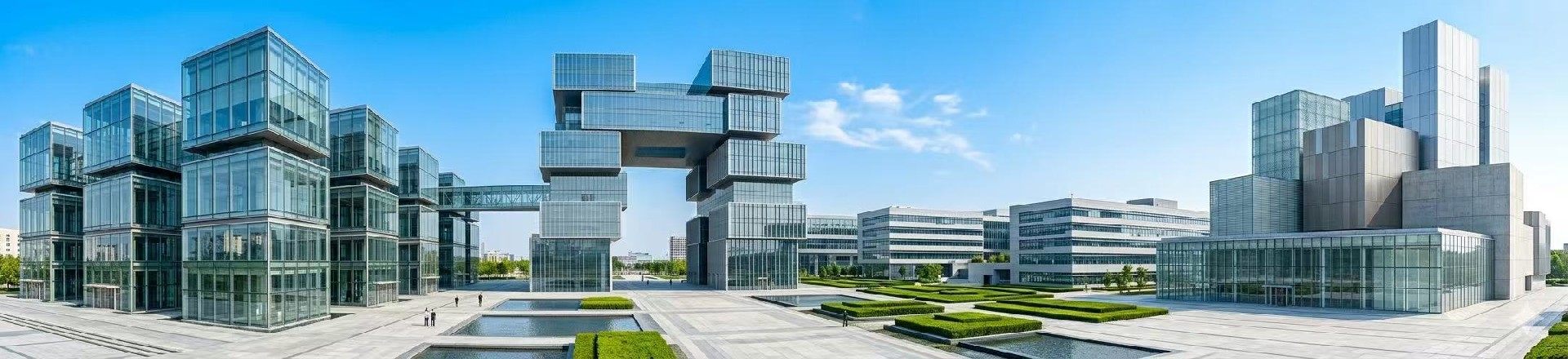
Release time:2026-09-18 Visits:3
Large glass panels have become an increasingly important element in modern architecture. From high-rise facades and curtain walls to hotels, commercial buildings, airports, and large public spaces, large format architectural glass allows designers to create open, transparent, and visually striking buildings.
Compared with conventional glass panels, large format glass provides fewer joints, larger viewing areas, and greater design flexibility. However, manufacturing, processing, transportation, and installation also become more demanding as glass dimensions increase.
For architects, contractors, developers, and glass professionals, understanding the advantages and challenges of oversized glass can help improve project planning and glass selection.
Large format architectural glass refers to glass panels manufactured in larger dimensions than standard architectural glass. Depending on the project, large glass panels can be produced in different thicknesses, structures, colors, shapes, and processing configurations.
Large format glass can include:
Large tempered glass
Large laminated glass
Large insulated glass
Large ceramic frit glass
Large tinted glass
Large curved glass
Customized facade glass
The actual maximum size depends on the glass type, processing equipment, thickness, structure, transportation conditions, and project requirements.
One major reason is the changing approach to modern architectural design.
Architects increasingly use glass to create a stronger visual connection between indoor and outdoor spaces. Large glass panels allow more natural light to enter buildings while creating cleaner facade lines.
Compared with multiple smaller panels, oversized glass can reduce the number of visible vertical and horizontal joints.
This makes large format architectural glass particularly attractive for contemporary buildings where transparency and visual continuity are important.
One of the most common applications is curtain wall glass.
Modern commercial buildings often feature large glazed facades to create a lightweight and contemporary appearance. Large glass panels can be integrated into curtain wall systems to provide extensive transparent surfaces.
Typical applications include:
Office buildings
Shopping centers
Hotels
Airports
Cultural buildings
Exhibition centers
Public buildings
High-end residential developments
For facade applications, glass selection needs to consider not only appearance but also structural requirements, thermal performance, solar control, safety, and local building regulations.
Large format glass is not limited to flat panels.
The development of curved architectural glass has made it possible to create rounded facades, flowing entrances, curved atriums, and other complex architectural forms.
Curved tempered glass can combine curved geometry with the safety characteristics of heat-treated glass.
Large curved glass can be used for:
Curved curtain walls
Building entrances
Hotel lobbies
Atriums
Canopies
Special architectural structures
Interior feature walls
For projects involving large curved panels, the radius, dimensions, thickness, glass structure, processing method, and installation system should be considered together during the design stage.
Tempered glass is widely used in architectural applications because of its enhanced mechanical strength and thermal resistance compared with ordinary annealed glass.
When larger dimensions are required, manufacturing becomes more technically demanding. Uniform heating and controlled processing are particularly important for large glass panels.
Large tempered glass can be used in:
Curtain walls
Facades
Windows
Doors
Partitions
Skylights
Commercial buildings
For applications with higher safety requirements, tempered glass can also be combined with other glass processing technologies depending on the project design.
Another important solution is large laminated glass.
Laminated glass consists of multiple glass layers bonded with an interlayer. When the glass breaks, the interlayer helps hold the fragments together.
Large laminated glass can therefore be considered for applications where safety and glass retention are important.
It is commonly used in:
Building facades
Curtain walls
Skylights
Glass entrances
Balustrades
Canopies
Interior partitions
Laminated glass can also be combined with other configurations, such as laminated insulated glass, when multiple performance requirements need to be addressed.
As buildings become more focused on energy efficiency, large glazed areas require careful consideration of thermal performance.
Insulated glass, also known as IGU or double glazing, consists of two or more glass panes separated by a spacer and sealed around the edges.
Large insulated glass units can provide solutions for:
Curtain walls
Building facades
Office buildings
Hotels
Commercial buildings
Energy-efficient windows
Depending on the configuration, insulated glass can incorporate different glass types, including tempered glass, laminated glass, tinted glass, and Low-E glass.
This allows designers to balance transparency, thermal insulation, solar control, safety, and appearance.
Large architectural glass does not have to be transparent and plain.
Modern facade design increasingly incorporates decorative glass to introduce color, patterns, textures, and visual identity.
Ceramic frit glass, also known as colored glazed glass or enamel glass, can create customized colors and patterns on the glass surface.
Large-format ceramic frit glass is suitable for:
Building facades
Curtain walls
Commercial buildings
Public architecture
Interior feature walls
Tinted glass provides different colors and visual effects while helping control glare and solar transmission depending on the selected specification.
Common options include grey, dark grey, blue, bronze, and green.
Patterned glass provides textured surfaces that can diffuse light and improve visual privacy while adding decorative effects.
These solutions allow large glass surfaces to become an important part of a building's architectural identity.
Producing large glass panels is more than simply increasing the glass dimensions.
A professional architectural glass manufacturer needs to consider the complete manufacturing process, including:
Glass cutting
Large panels require accurate cutting according to project drawings and specifications.
Edge processing
Edge polishing, edging, drilling, and other processes need to meet dimensional requirements.
Tempering
Large tempered glass requires controlled heating and cooling throughout the glass surface.
Laminating
Large laminated glass requires precise alignment and controlled bonding between the glass layers.
Insulating
Large insulated glass units require accurate assembly, sealing, and quality control.
Curved glass processing
Large curved glass requires specialized forming and tempering technology.
Packaging and transportation
Oversized glass requires professional packaging and handling to reduce the risk of damage during transportation.
The larger the glass panel, the more important early-stage planning becomes.
Architects and contractors should consider the following before production:
Final glass dimensions
Glass thickness
Glass structure
Tempering requirements
Lamination requirements
Insulated glass configuration
Curvature and radius
Edge processing
Installation method
Transportation route
Lifting equipment
Site conditions
For extremely large or curved glass, transportation and installation should be considered together with manufacturing from the beginning.
Early communication between the architect, contractor, glass manufacturer, and installation team can help reduce production and installation risks.
Not every project can use standard glass specifications.
Modern architectural projects may require customized dimensions, unusual shapes, special colors, decorative patterns, or combinations of multiple processing technologies.
This is where customized architectural glass becomes important.
A professional glass manufacturer can develop glass solutions according to project drawings and technical requirements.
Possible customized solutions include:
Large format tempered glass
Large curved tempered glass
Laminated safety glass
Insulated glass
Ceramic frit glass
Tinted glass
Patterned glass
Decorative laminated glass
Specialty architectural glass
For complex projects, customization allows the glass solution to better match both architectural design and functional requirements.
The continued development of architectural design is creating demand for larger, more complex, and more customized glass products.
Large format architectural glass is becoming an important solution for modern facades, curtain walls, commercial buildings, hotels, public architecture, and high-end interiors.
At the same time, large glass is increasingly combined with technologies such as tempering, laminating, insulating, ceramic frit printing, tinting, and curved glass processing.
This means the future of large glass is not simply about making bigger panels. It is about creating glass products that combine size, safety, energy performance, aesthetics, and customized design.
Large glass panels are changing the way architects approach modern buildings. From seamless curtain walls and expansive facades to curved structures and decorative surfaces, large format glass provides greater possibilities for architectural design.
However, successful large glass projects depend on more than glass size. Manufacturing technology, processing capability, quality control, packaging, transportation, and project coordination all play important roles.
As an experienced architectural glass manufacturer, XSJ Glass provides customized solutions including large format glass, curved tempered glass, tempered glass, laminated glass, insulated glass, ceramic frit glass, tinted glass, patterned glass, and other specialty glass products for architectural and commercial projects.