Copyright © 2026 Chengdu Xinshijia Specialty Glass Technology Development Co., Ltd.
Release time:2026-07-17 Visits:4
The Rising Trend of Curved Tempered Glass in Architecture
With the continuous upgrading of contemporary architectural design, designers and architects are pursuing innovative building materials that integrate aesthetic diversity, structural safety, and practical functionality. Among all architectural glass products, curved tempered glass (also widely referred to as curved toughened glass) has emerged as a premium solution for modern commercial buildings, luxury residential villas, transportation hubs, and high-end interior decoration projects.
Different from conventional flat glass, custom bent tempered glass features fluid 3D contours and seamless visual continuity, breaking the limitations of rigid flat building surfaces. It enables architects to create dynamic, streamlined, and iconic building appearances. Whether applied to large-scale curved building facades, panoramic bent windows, or artistic interior partitions, high-performance curved toughened glass delivers outstanding artistic expression and stable structural performance.
What Is Curved Tempered Glass?
Curved tempered glass is a thermally strengthened safety architectural glass processed through professional high-temperature bending and quenching technology. The standardized manufacturing process involves heating qualified annealed flat glass to its softening point in a dedicated tempering furnace, forming it into a customized radius via gravity bending or press bending, maintaining uniform temperature distribution, and then conducting high-pressure air rapid quenching to form stable surface compressive stress.
This sophisticated processing method greatly enhances the glass’s overall performance while realizing personalized curved shapes. Compared with ordinary annealed glass, premium curved tempered glass provides comprehensive performance advantages:
• Higher mechanical strength and load-bearing capacity
• Excellent impact and wind pressure resistance
• Superior thermal stability and temperature shock resistance
• Enhanced passive safety performance
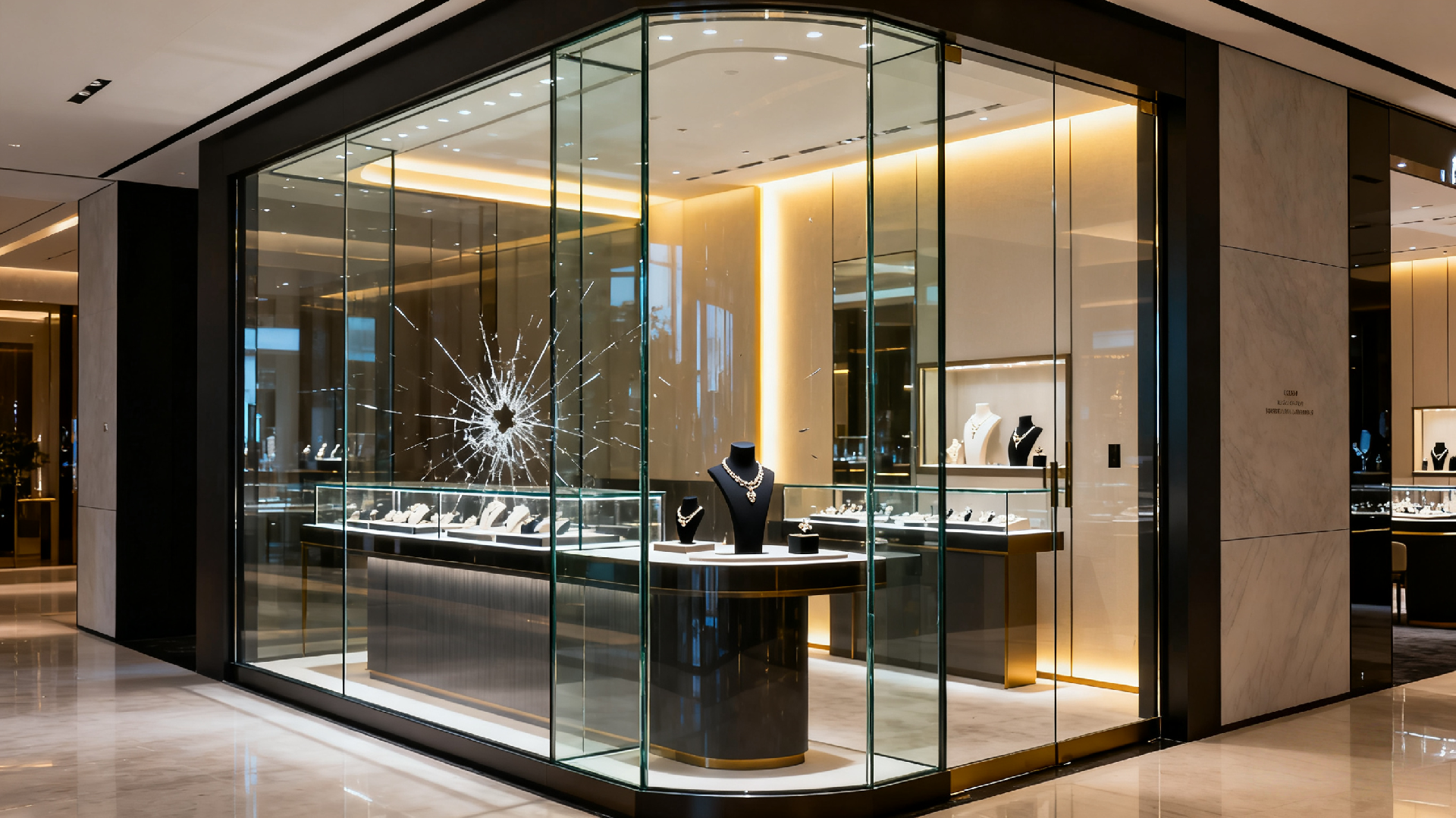
Upon fracture, curved tempered glass shatters into small, blunt granular particles instead of sharp jagged shards, effectively reducing injury risks. It is the ideal safety glass option for high-standard architectural projects with strict safety requirements.
It is worth noting that curved tempered glass has inherent processing characteristics: all cutting, drilling, and surface finishing must be completed before thermal bending, as tempered curved glass cannot be reprocessed. In addition, strict restrictions apply to the minimum bending radius according to glass thickness. To mitigate spontaneous breakage risks, manufacturers can equip curved glass with Heat Soak Test (HST) treatment for ultra-safe building applications.
Core Applications of Curved Tempered Glass in Modern Buildings
Benefiting from its unique aesthetic advantages and reliable physical performance, customized curved tempered glass has been widely adopted in diversified high-end architectural scenarios worldwide.
1. Curved Glass Curtain Walls & Building Facades
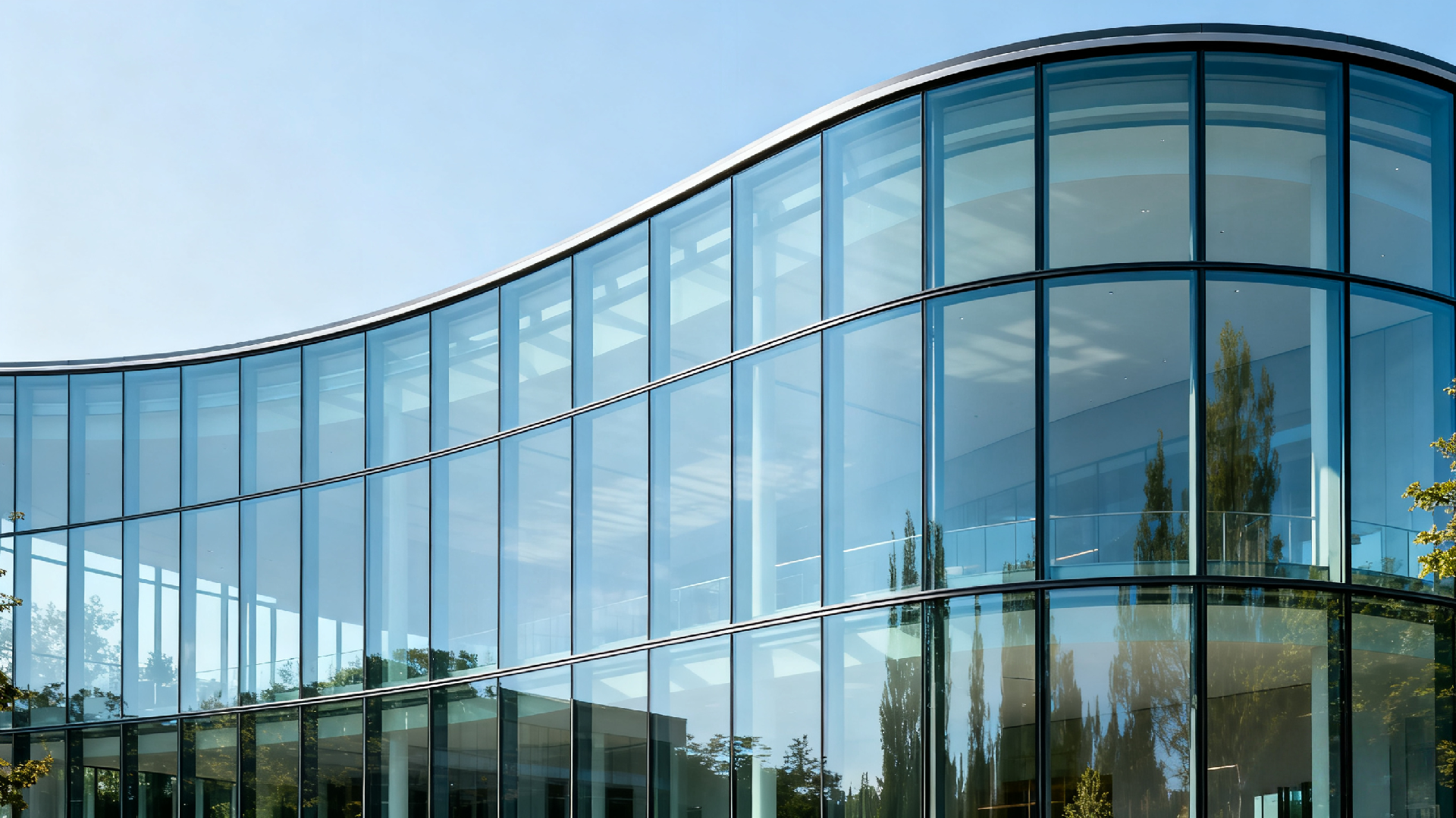
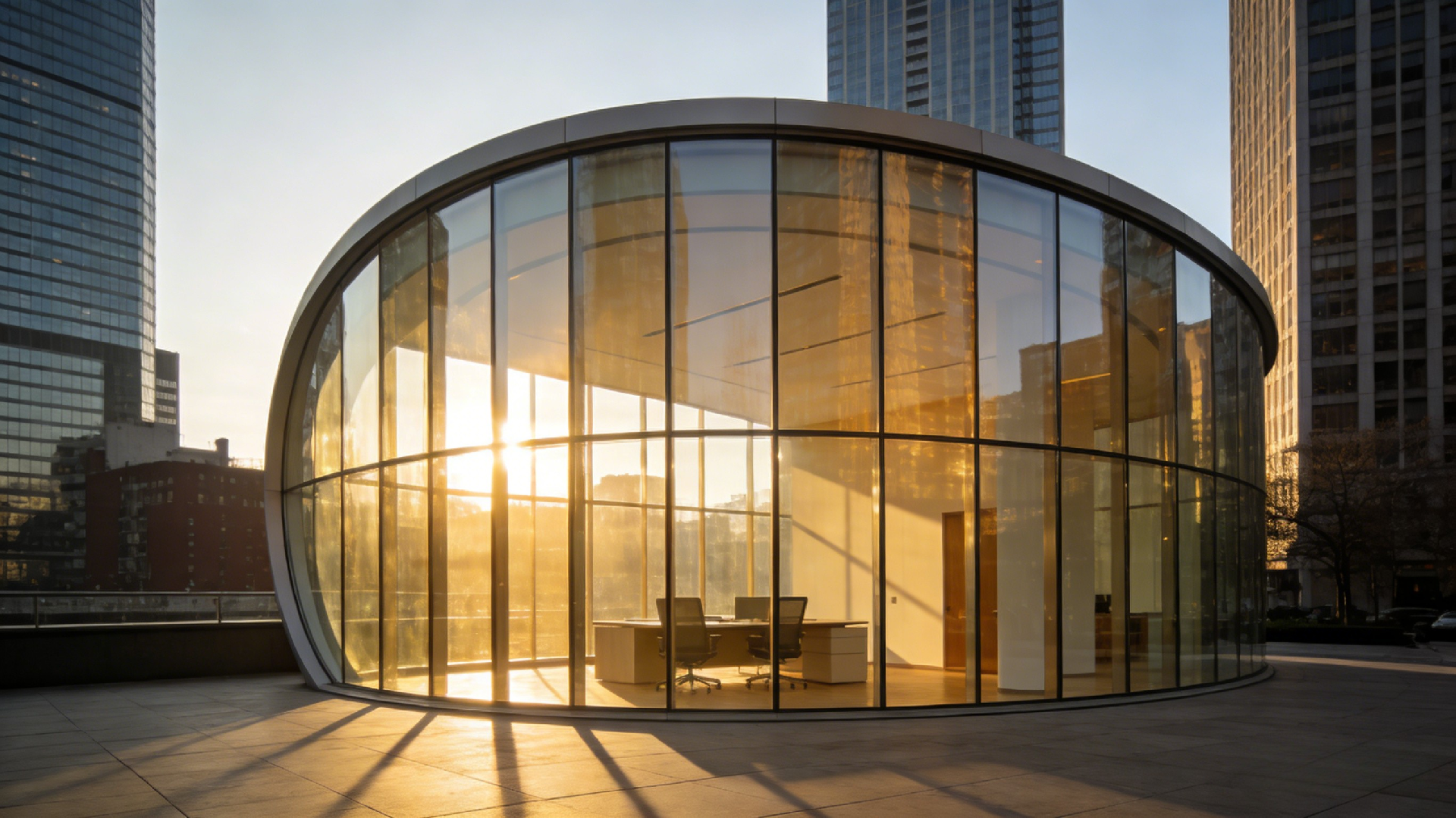
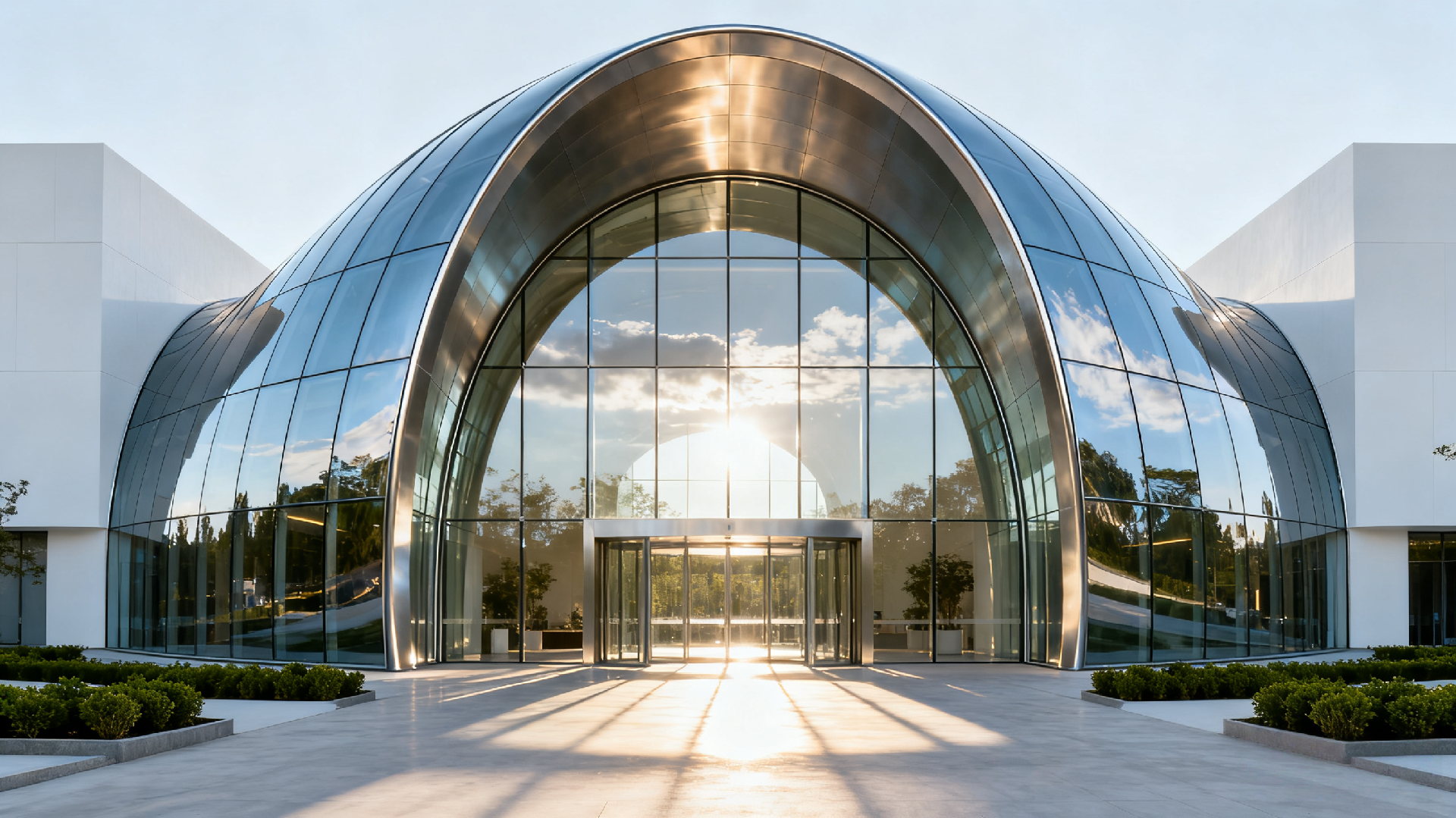
Modern commercial complexes, landmark buildings, and office towers widely adopt large-size curved glass curtain walls. The seamless curved surface eliminates rigid visual boundaries, maximizes natural daylight penetration, optimizes building energy consumption, and creates a modern, high-end, and iconic architectural silhouette.
2. Luxury Residential Construction
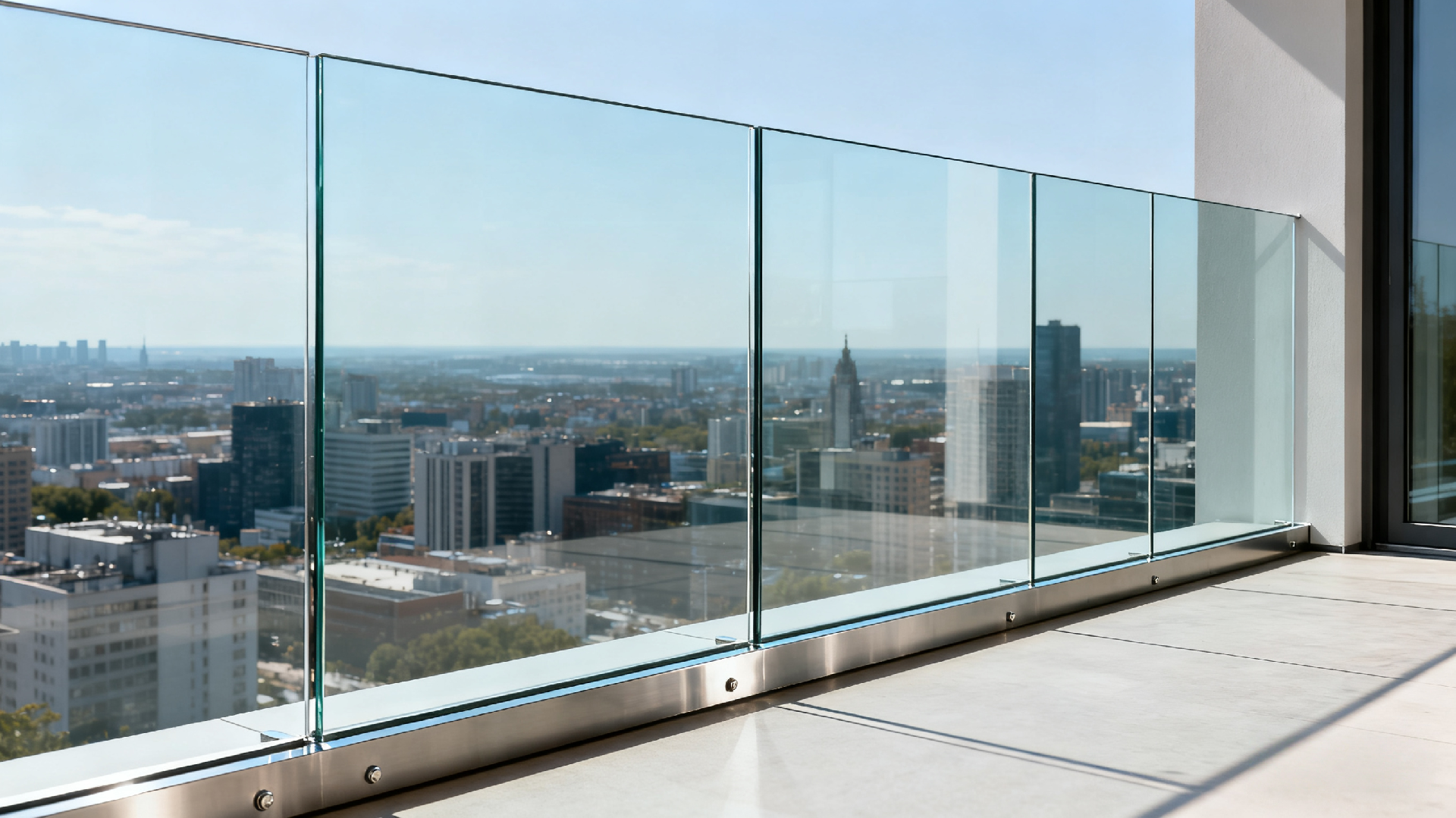
For high-end villas, customized luxury apartments, and courtyard residences, curved panoramic windows, curved glass balustrades, and sunroom glass panels expand indoor spatial perception, integrate indoor and outdoor landscapes, and greatly upgrade residential grade and comfort.
3. High-End Interior Design
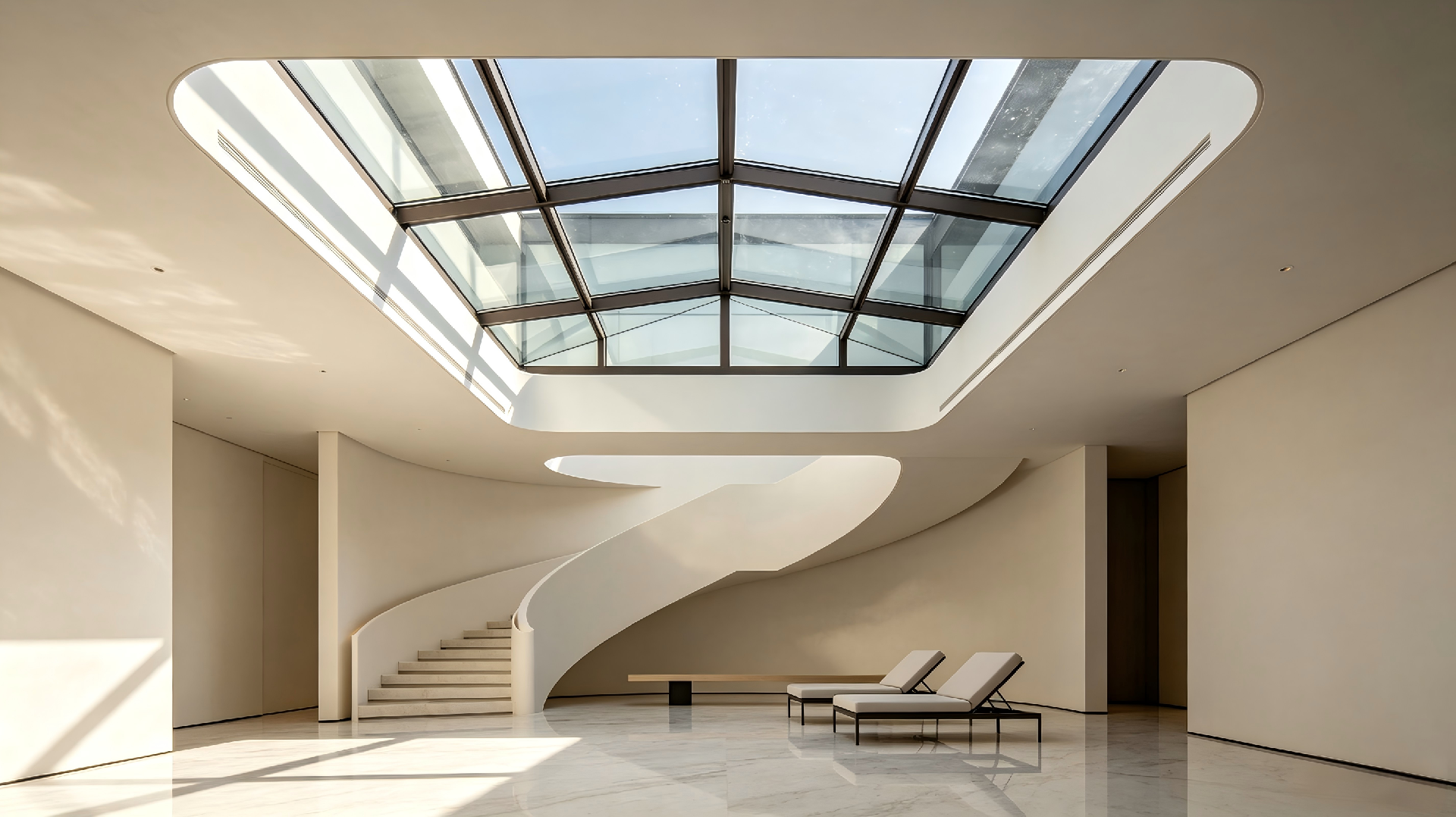
Curved toughened glass is extensively used in interior decoration to create a minimalist and premium space atmosphere, including curved glass partitions, curved tempered shower screens, staircase glass balustrades, decorative curved glass walls, and exhibition hall display glass. Its smooth streamline shape softens indoor space and improves overall design texture.
4. Transportation & Public Infrastructure
As a key application scenario, transportation facilities such as airport terminals, high-speed railway stations, and urban landscape pavilions adopt customized curved tempered glass for daylighting roofs and streamlined facade components, balancing safety, durability, and modern aesthetic design.
Advanced Deep Processing Technologies for Custom Curved Glass
To meet differentiated architectural requirements for energy saving, sound insulation, privacy, and decoration, curved tempered glass can be combined with multiple mature glass processing technologies to form integrated customized solutions.
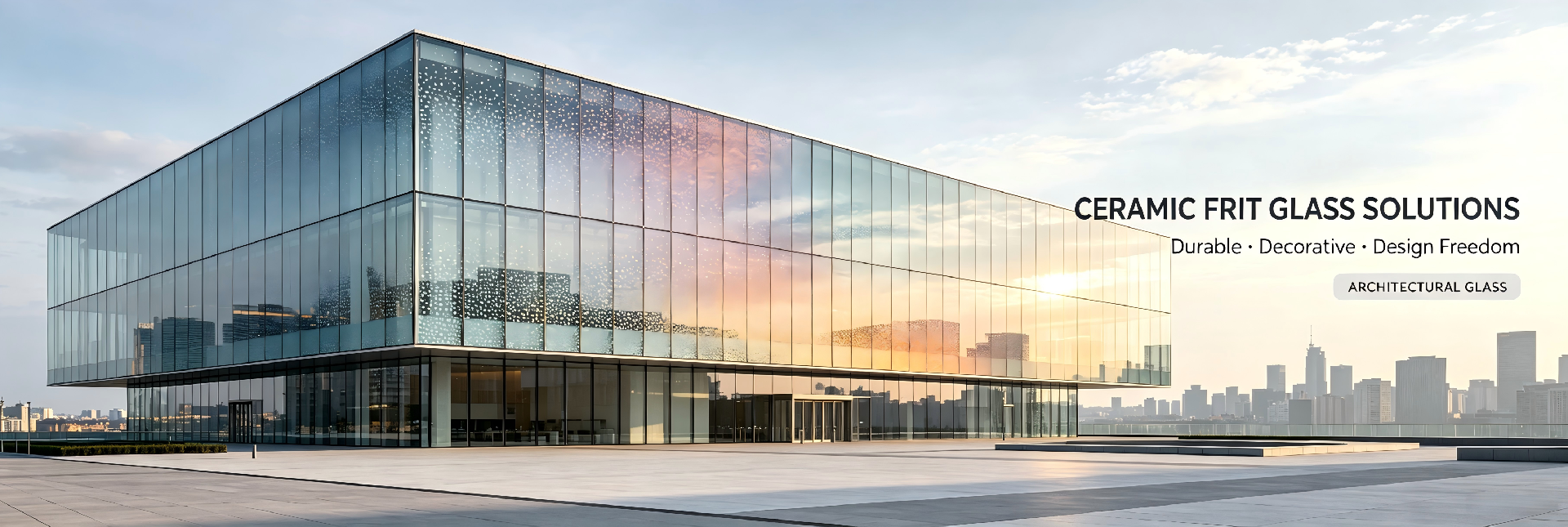
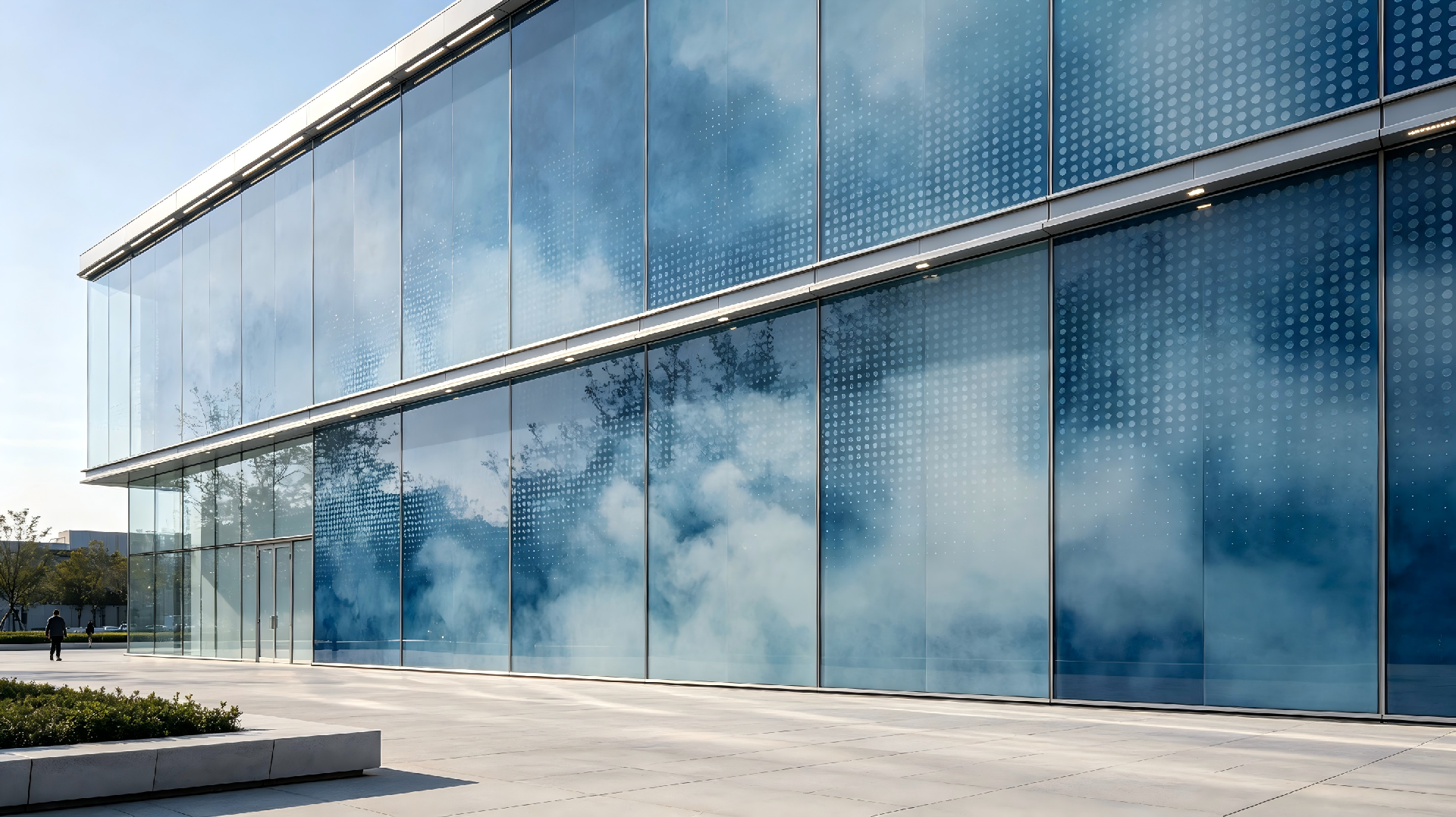
• Curved Ceramic Frit Tempered Glass: Custom screen printing or digital ceramic frit patterns provide stable decorative effects, effective privacy protection, and optimized solar control performance, suitable for building facade decoration and shading projects.
• Curved Laminated Glass: By bonding multiple curved glass layers with high-quality PVB or SGP interlayers, laminated curved glass achieves ultra-high safety, excellent sound insulation, and strong impact resistance, remaining intact after fracture to prevent falling hazards.
• Curved Insulated Glass Units (IGUs): Multi-layer hollow structure effectively blocks heat conduction, significantly improving thermal insulation and energy-saving performance. Matched with Low-E coating, curved Low-E insulated glass further reduces radiation heat transfer, perfectly fitting green energy-saving building standards.
Through flexible combination of different processing technologies, customized curved glass can achieve a perfect balance of architectural aesthetics, structural safety, weather resistance, and energy efficiency.
International Safety Standards for Curved Tempered Glass
High-quality architectural curved glass is strictly manufactured and inspected in accordance with global authoritative safety standards to ensure stable and reliable performance in complex building environments. In addition to flat tempered glass standards, production complies with the ISO 11485 series specially formulated for curved building glass to standardize dimensional tolerance, optical performance, and fragmentation indicators.
Standard | Description |
EN 12150-1 | EU standard for flat thermally toughened soda-lime silicate safety glass (curved toughened glass technical guidance specified in Annex A) |
ASTM C1048 | US standard specification for heat-treated fully tempered and heat-strengthened architectural glass |
BS 6206 | UK standard for impact performance assessment of building safety glazing materials |
AS/NZS 2208 | Australian and New Zealand safety standard for flat and curved building glazing products |
Future Development Trends of Curved Architectural Glass
Driven by the global boom in green buildings and innovative personalized architectural design, market demand for customized curved tempered glass continues to grow steadily. The industry presents four major development trends:
• Large-size ultra-curved glass panels for super high-rise landmark buildings to realize integrated seamless facade design
• Popularization of high-energy-efficiency curved Low-E insulated glass to meet zero-energy building requirements
• Intelligent integration of dimmable smart curved glass to realize adjustable light transmission and privacy intelligence
• Eco-friendly low-carbon glass processing technology and HST safety optimization to reduce spontaneous breakage rate
Professional glass manufacturers with advanced bending equipment, precise quality control systems, and one-stop deep processing capabilities will become core suppliers for global high-end architectural glass projects.
Conclusion
Curved tempered glass has become an indispensable core material in modern architectural design by virtue of its flexible shaping ability, excellent safety performance, and durable weather resistance. Combined with laminated, insulated, Low-E coating, and ceramic frit processing technologies, customized curved glass can solve personalized material demands for complex building facades and interior spaces.
For architects, engineering contractors, and real estate developers pursuing high-quality building effects and long-term stable performance, selecting a professional customized curved glass manufacturer with mature processing technology and complete certification is the key to realizing perfect integration of architectural aesthetics and structural safety.
Get your customized curved tempered glass solution with certified quality and precise processing. Contact our team for a free project quotation and technical support today.